
“Forever is a current event” – Yasiin Bey
In Mama’s Baby, Papa’s Maybe: An American Grammar Book, Hortense Spillers employs the word distortion twice. The first invocation of the term refers to the stereotypical nicknames imposed upon African American women such as those confounded identities listed in the piece’s introduction:
Let’s face it. I am a marked woman, but not everybody knows my name. “Peaches” and “Brown Sugar,” “Sapphire” and “Earth Mother,” “Aunty,” “Granny,” God’s “Holy Fool,” a “Miss Ebony First,” or “Black Woman at the Podium”: I describe a locus of confounded identities, a meeting ground of investments and privations in the national treasury of rhetorical wealth (Spillers, 443).
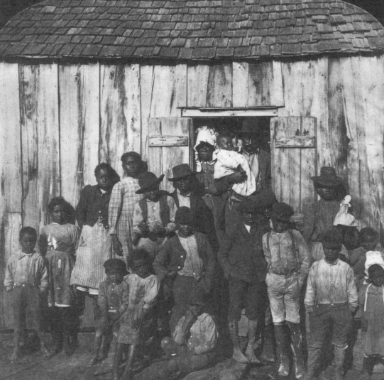
Spillers writes that these names “demonstrate the powers of distortion” that white society claims as its right. In this same paragraph, Spillers expresses how difficult it is to find direct and “amplified reference to African women during the opening years of the [slave] Trade,” stating that the “cultural subject is concealed beneath the mighty debris of the itemized account” (Spillers, 453, italic emphasis mine). Captured African women, treated as nameless, faceless cargo by disinterested traders, exist within the archive exclusively as statistics and dimensions. Burying them within ledgers, history represents these women only insofar as it must be known that four of them should be reckoned as five males when considering a ship’s capacity. Spiller’s second usage of “distortion” furthers her explanation of this erasure of Black women from history. The silence of the archive “is the nickname of distortion” obscuring the humanity of black women that “a revised public discourse would both undo and reveal” (Spillers, 453). In the same way a society dominated by white supremacy nicknames black women, distorting them, it nicknames distortion itself “silence,” obfuscating the (white) human culpability for the elision of Black women’s histories.
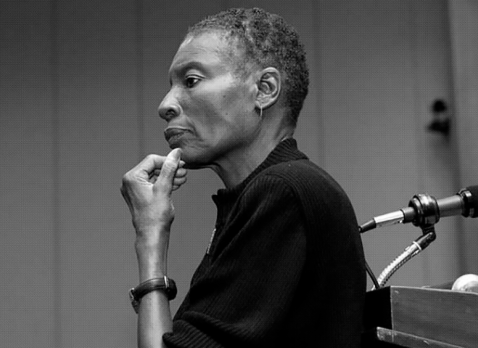
Hortense Spillers
British electronic musician Klein takes up Spillers’s task of revisionist public discourse, undoing and revealing the distortion white society imparts on black existence. Klein’s album marked, in its distorted instrumentation, its references to black diasporic dance music, and its withholding of (until its conclusion with) lyrical autobiography strips down layers of misnaming track-by-track. In doing so, the record replicates and atomizes the “marked” life Spillers describes in Mama’s Baby, Papa’s Maybe, producing “a radically different text for a female empowerment” as Spillers implores.

Klein
Before erecting bridges between its content and marked, a brief summary of Mama’s Baby, Papa’s Maybe is in order. In this “american grammar book,” Hortense Spillers argues that, beginning with the capture of slavery and its dehumanizing indexation, white society has imposed markings on black women. Black women were reduced to statistic information in the slave trade, and in doing so, not only did white society obliterate individual black identity, but it broke down the concept of womanhood and motherhood entirely when relating to blackness. A key argument of Spillers is that the “hieroglyphics of the flesh” (Spillers, 446) torn into slaves’ skin through horrific physical violence, the phenomenon of “marking and branding” (ibid) transfers intergenerationally. This excruciating marking of black flesh became an inheritance mothers transferred to their children in the matrilineal economy of slavery. Beyond this, the marking is reproduced constantly—while not always made through physical attack, the stereotyping, misnaming, and dehumanization of black women continues to mark them today.
Klein’s marked opens establishing a motif of human foreground noise. In the opening track “winners clause,” for example, the lovely hum of soft jazz piano projects evenly in the mix with the rumble of a room. Human voices murmur at an equivalent volume to the piano, and humid static pervades the song. The only thing cutting through the mix is nine or ten sparsely laid staccato pops, akin to the sounds of dust on a vinyl record. The dust, here, within and atop the wax is louder than the piano itself. Evidence of human ambivalence in the murmuring socialization and crackling stands shoulder to shoulder with the instrumental melody. In track five, (breaking news), attend to the moments of requiem. Listen to the clearings between harrowing patches of crooked guitars, wailing indecipherable voice, and drum-kit stomping—and you’ll hear Klein composing. With the only overt audio being a sampled austere voice announcing “breaking news” and accompanying gusts of reverb, a clicking, rubbing, dragging comes through like the sounds of fingers lifting off strings between the opening beats of D’Angelo’s “untitled.” The sound is unmistakable. Open your laptop, find the song yourself, and listen—just don’t press play. On “(breaking news),” Klein’s fingers operating a laptop touchpad become musical material. While this song section has the thinnest waveform, there isn’t silence. Insofar as distortion refers to an intentional misleading, a contortion of the truth—as it does in describing how nicknames white society applies to black women mark and muddle their identities—a complete musical silence laid intentionally by human hand but revealing no human engagement would distort the truth. Or, to put it elegantly, silence would be a nickname for distortion. An electronic music that resolved to completely empty silence would distort the reality that this silence was considered, decided upon, arranged, and played. In doing so, Klein resists the distortion of silence and embodies Spillers’s conclusion that lacunae are laid by hand.

“marked” by Klein
The ambient noise of finger tapping on “(breaking news)” becomes an even greater expression of the human role in silencing when heard in context of the rest of the song. Punch your trackpad with two fingers and listen while you zoom out—the sound of silence on “(breaking news)” reveals the intentionality behind the obfuscation of voices in ostensibly nonfictional narratives. In “(breaking news,)” that aforementioned eponymous vocal refrain announces a delivery of sensational information. The announcement itself, however, remains the only comprehensible voice. Beneath this call, a sea of voice noise washes in and out of screeching guitar. Echoing and vacillating between the left and right audio channels, the voices have been processed in such a way that, like a cycle halfway through Alvin Lucier’s I am in A Room, the tones of voice comprise a spoken word emptied out of language. As these murmurs continue, they bleed into screeches, and the song’s trackpad clicking emerges. Klein had to obscure those voices intentionally. As fingers click, revealing the human practice of electronic music, the song reminds that the mess of incomprehensible vocal agony in support of “breaking news” must be distorted by human hand. Ledgers reducing enslaved women to numerals did not emerge from the ocean unless wrenched from the sea floor by the hand of a Drexciyan—no, they were written and created to represent, to name, to mark black women as numerical objects rather than human beings. The “silence” of the archive as to the lives of black women relies upon intentional negligence and erasure. Klein shows that the blurring of a voice in capture takes human doing.
If this resistance to the distortion of silence is one way in which Klein reveals the crueltyof marked existence, how does marked begin to undo that cruel distortion? marked continuously ruptures silence with abstract, ghostly sheets of sound that, song after song, blast away misnaming as they resist recognition. Spillers notes that laden with stereotyping misnames, she “must strip down through layers of attenuated meanings” in order for her “to speak a truer word concerning” herself (Spillers, 443). Laden by markings and stereotypes, Spillers says that she must somehow throw off these misnames in order to make a genuine personal expression and define her own identity. How might one go about stripping down the intangible? In concluding Mama’s Baby, Spillers argues that black women should, rather than attempting to achieve recognition within white structures of femininity from which white society excludes them, actually claim “the monstrosity (of a female with the potential to ‘name’)” (Spillers, 463). If to name in the context of stereotypical marking is to distort, marked embraces sonic distortion, using blistering guitar tones and electronic effects to wash away imposed definitions like an industrial cleaner blasting walls with sand to eviscerate dirt.
The first song of the album may begin with a murmuring that reveals the distortion of silence, but that measured introduction soon cuts harshly to an unrecognizable industrial shriek that starts the album’s attack on marking. The comfortable jazz piano and calm conversation of “winner’s clause” give way to a loud rumble of guitars, a rupture that obliterates anything representative or recognizable. While one may say of the first notes of the song that their jazz style plays in line with historically black or originally black genre, the layers of guitar provide no notable melodic phrase. The categorizable notes of the piano and the evidence of human engagement in the rumblings of conversation are blown away in an instant by the onset of these industrial guitars, not fading in but slamming in and sucking all air with them upon departure. Music writer and academician Kodwo Eshun describes (now defunct) Detroit Techno duo Drexciya as esoterrorists: “something, or someone, who terrorises through esoteric myth systems. Infiltrating the world, the esoterrorist plants logic bombs and then vanishes, detonating conceptual explosions, multiplying perceptual holes through which the entire universe drains out.” Naming being a sort of myth system, and musical distortion transforming transcribable instrumentation into esoteric waves of noise, the esoterrorist jihad lives on in marked. As the guitar noise tears through “winner’s clause,” the inhabited, ordinary universe of dinner jazz piano explodes. In the song’s conclusion, the guitars conclude, revealing a universe blown up and drained out—no piano, no chit-chat, only the haunting echoes of an opaque sludge. marked begins by establishing distortion as a human creation and silence as an obscuring falsehood, then obliterates a recognizable audio world in the jazz-club by planting the esoterrorist bomb of a distortion turned up to eleven.
The next song “gully creepa” picks up where “winner’s clause” left off, throbbing guitar sounds now abetted by percussion so blasted out its component parts—a snare, kick, tom-tom, etc.—become unrecognizable. This song continues the stripping down Spillers implores by conjuring an abstracted ghost of its namesake, the 2008 dancehall tune by Elephant Man. Of the abstract dirges of black industrial music, Kodwo Eshun writes:
“It is not that such sounds do not evoke reggae or soul or electro or funk, as much as they emit ghost signals of what can be called dub in its trace elements. Such sounds seem as if they are seeking to elude recognition by summoning the textures of wraith, the aspiration to mist, the will to miasma, or the urge to reverberation.”
Klein strips another layer of misnaming in the summoning of an abstracted gully creepa. Rapid fire drums carve the album’s first danceable groove through harsh crags of guitar. Eventually, a siren-sounding synthesized horn line begins blasting. Klein’s most overt reproduction of the Elephant Man and Seanizzle production comes in this chirping melody. In both songs, three bars of lower pulses resolve to a fourth bar of rhythmically identical but higher-pitched chirping. While Eshun speaks of ghost signals, this song seems zombified. Marching along at a much slower tempo than Elephant Man’s and full of rumbling, peaking distortion, Klein makes esoteric myth of a straightforward jam. In creating a cacophonous homage that evokes a dancehall precedent but buries it beneath layers of industrial texture, Klein’s “gully creepa” eludes recognition, and in doing so, continues to resist stereotype and marking.
Attending to the lyrics of the original song, “gully creepa” further follows Spillers’ revolutionary instruction as it claims the monstrosity white culture imposes. Elephant Man sings, instructing the listener on just how to do the gully creepa dance, that you must “move your foot dem, like a roller, make your face just like a creature, then you do the bloody creepa, creepa.” Emphasizing this embrace of monstrosity, Elephant Man along with other ensemble performers in the “Gully Creepa” video don the digs of horror monsters. Elephant Man wears a Freddy Krueger costume, and at one point in the video, his face literally morphs into that of a monster, with his skin turning blue and his nose inflating. Reframing the imposition of monstrous qualities, among them large noses and non-white skin, in service of intensifying the resonance of his dance track, Elephant Man evades an assimilationist distortion of his own identity which might prevent him from adopting monstrous traits in a desire to fulfill the idealized qualities of white masculinity. While Klein sands away these lyrics in her version, the choice to resurrect a zombified dancehall track featuring these qualities furthers her embrace of the monstrous power of distortion.

Klein
“Blow the Whistle,” the next song on marked, continues Klein’s abstracting reproduction of disparate black dance music, embracing horizontal familiarity while chipping away at misnaming. “Blow the Whistle” refers to the song of the same name by bay-area hyphy rapper Too $hort. “Blow the Whistle” is the only song on marked with an official video, and this video, directed, edited, and choreographed by Klein clarifies the connection between this song and the classic Too $hort party record. Klein’s “Blow the Whistle” opens with a long period of whirring, which, in conversation with the song’s video as well as the video for Too $hort’s original song, indicates the sound of helicopter blades spinning. See, both Too $hort and Klein open their videos with extended establishing aerial shots panning across urban landscapes. Too $hort’s video, unlike Klein’s, includes labels reading “Oakland, California,” “Too $hort,” and “Where The Youngsters Get Hyphy.” As the camera comes to the ground, the Too $hort video proceeds to portray a party in a club, with the rapper centered performing his lyrics directly to the camera. Klein’s video, on the other hand, features no such text, and when its dancers appear, they boogie down in slow motion on bare cement. An abstracted form of the Too $hort video, Klein’s features no dancefloor or party, no known location, and nothing else that might constrict her expression as it opens it to recognition. As the Klein song develops, marked’s most traditionally infectious drums punch to the front of the soundscape, while non-representative (which is to say, musical elements that do not immediately evoke the instruments of their creation) sounds remind of Too $hort’s whistle and rattle. Once again emitting ghost signals of late-aughts black dance music, Klein uses abstraction in order to scrape closer to the truth beneath imposed names.
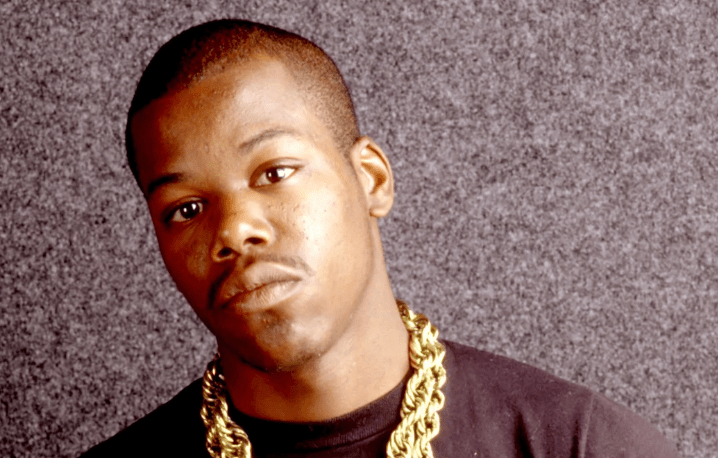
Two $hort
As the album continues eroding misnaming through the use of industrial, abstract noise, it eventually reaches a point of clarity—the final two songs, “neek” and “exclusive” feature Kleins voice clearly, arriving at a truer word concerning herself. “neek” occupies only 18 seconds, and features no instrumentation whatsoever. A snippet of jovial conversation between Klein and fellow musician LA Timpa, wherein they sing together the phrase “everybody wants to be the cool kids, until they get… and they get..” returns the album to its beginning as it recalls the pleasant chattering of “winner’s clause.” Conversation, the sound before the rupture that once evidenced distortion in its inclusion of crackle and its refusal of silence, now returns with cheerful disposition. This introduces the finale, “exclusive,” Klein’s only rap engagement on the album. Darting between first and second person, she describes her prodigious greatness. This extends Klein’s autobiography in this verse—after Spillers says that “I must strip down through layers of attenuated meanings,” she clarifies that the personal pronoun “I” there is offered “in the service of a collective function.” By describing herself using both “I” and “she” pronouns, Klein reaches out to extend her self determination to the collective. While the title “exclusive” becomes a vocal refrain, seemingly mirroring the earlier “breaking news,” the murmurs on that track have become, through the course of the album, an embodied voice. This recontextualizes the meaning of “exclusive” itself. As Klein raps “Fuck that shit Imma step in this body, me,” immediately followed by the punched-in and pitched up word “exclusive,” not only does the word refer to breaking news, but to reclamation. She “steps in this body,” exclusive—the body is exclusive, exclusively hers as she inhabits it and controls it, as she names and defines it. Klein hasn’t shifted the entire world order or upended her material position, as she raps “She started from the bottom man, she’s still in the bottom man,” but she can finally embody her voice. Shaking off misnaming, Klein raps twice: “she been doubted by a lot of people, fuck that it’s just jokes cause they aint her people.” Having reached a point of self definition, the impositions of that other people become nothing more than jokes.
From start to finish, in marked, Klein repeats cycles of rupture and distortion, revealing the falsity of silence and abstracting works of black dance music through industrial noise to strip away incorrect imposed definitions of herself and finally come to speak her voice. Of course, this paper does not argue that this summation describes the sole action of the album. In fact, even viewing the record exclusively in conversation with Spillers’ essay Mama’s Baby, Papa’s Maybe, an immense amount of ground could still be covered provided a longer page count. For example, the song “drugs won’t work (like mother like son)” indicates through its title Spiller’s argument that “It is the heritage of the mother that the African-American male must regain as an aspect of his own personhood” (Spillers, 463) due to relations originating in slavery which made illegitimate the father in black family—while the phrase often goes “like father, like son,” or “like mother, like daughter,” the song speaks to the matrilineage Spillers discusses. This note offers one example of further intersections between Spillers and Klein, not to speak of analysis of marked which ventures beyond Mama’s Baby, Papa’s Maybe. This paper, while not encompassing all that marked or Mama’s Baby has to say, hopefully communicated the essence of both works, and tied between them a kinship.
By Liam Mason
Bibliography
“Blow the Whistle.” YouTube, uploaded by Klein, 2024
“Blow The Whistle.” YouTube, uploaded by Too Short, 2008
Eshun, Kodwo, “Echoes of Dissent,” 2023
Edhun, Kodwo, “Drexciya: Fear Of A Wet Planet,” The Wire, 1998
Klein, “Marked,” Parkwuud Entertainment, 2024
Spillers, Hortense. “Feminisms: An anthology of literary theory and criticism.” Edited by Marianne DeKoven et al. American Literature, vol. 65, no. 1, Mar. 1993
 SoundFynd