
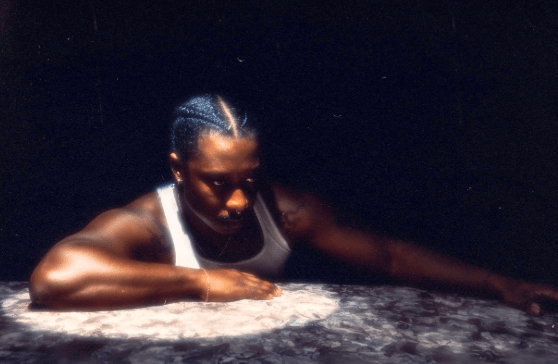
By Ike Nnabuife
McKinley Dixon Talks Magic, Anime, Sinners, The Scholastic Book Fair, and More
Late to the party as always, I just finished watching Attack on Titan a few weeks ago. I tend to struggle with patience at times, so I opted to wait until the show was over to binge it in order to avoid experiencing the crippling anxiety between seasons, final chapters, and final chapters: part 2.
The saga’s back half put me under a spell that hasn’t seen that level of efficacy on me since watching Fullmetal Alchemist: Brotherhood back in middle school. The whole ordeal reminded me of the primary reason I fell in love with anime and fantasy as a genre in the first place.
It’s been generally understood that oral history and storytelling’s power to transmogrify the dearly departed into immortal legends is one of the world’s few true magics. Griots… firekeepers… emcees… writers… these people’s strongest superpower was the ability to turn senseless grief into meaning.
Nobody in hip hop right now understands that better than McKinley Dixon.
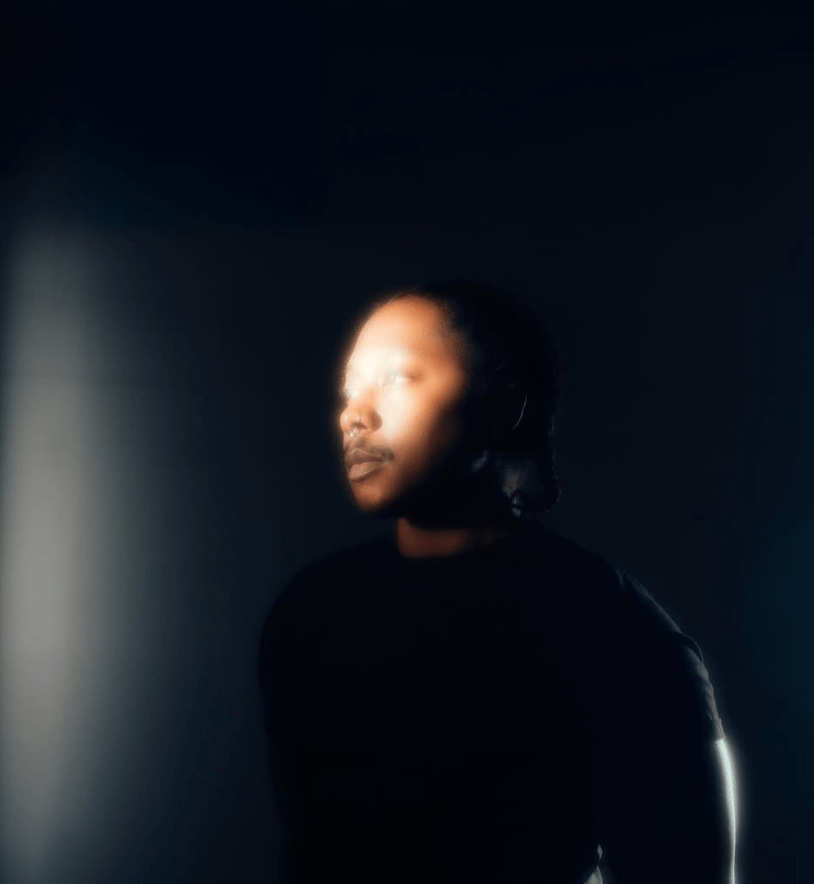
Ike Nabuife: What does magic mean to you?
McKinley Dixon: Quick. Dangerous. Wonderful. Childlike. Ominous. Glass-like. Inherent. Powerful.
IN: Can you go deeper into that? What did you mean by “inherent”?
MD: I view magic as the intersection of luck, knowledge of the past-present-future… and the way you interact with those around you. Because the definition is so broad, it doesn’t necessarily have to be one thing. To me, if you have those elements in mind, there are magical elements in your life, but you have to be careful in how you approach them. You can’t disrespect the future. You can’t disrespect the Earth around you. You kind of have to lean into that a little. All of those things are easy to not do—but they’re also easy to do.
Dixon considers himself primarily an apprentice to Zora Neale Hurston, specifically singing praises for her posthumous Hitting a Straight Lick with a Crooked Stick.
IN: A few days ago, I started reading Mules and Men, because ever since Sinners came out, I’ve been thinking about the relationship between hip-hop and African traditionalism. How it’s a continuation of griot tradition—maintainging that oral history—and how that connects to ideas of afrofuturism, life and death, etc…
MD: Exactly. She’s the best at doing that.
IN: A lot of her work is folklore.
MD: She will tell you exactly what a motherf**ker said, and she’ll be like, “I immediately felt it was a spell.”
IN: What are the components of a good spell to you?
MD: Intention. Patience. Practice. And the Earth.
IN: When you say “practice”, does punctuation fit into that? Because I noticed you’re so intentional with punctuation and breathing in your performances and in your titles.
MD: Yes. On the title: “Magic”, “Comma,” and then “Alive!” They’re two separate thoughts. “Magic” is the birth, and “alive” is the end. On the album, Quelle Chris as the spell is the question mark.
Dixon’s 2025 release is where the magic really happens. On the punctual Magic, Alive!, we see the Chicago poet pick up where beloved writers left off to contribute to the larger cultural canon of magical realism — a genre known for using fantastical literary devices to explain the seemingly unexplainable circumstances of the oppressed.
Throughout the past decade, magical realism has notably come alive in the black community through afrosurrealism. Ryan Coogler famously inverted this afrofuturist trend earlier this year with the time-bending Sinners by examining the undying nature of America’s past to comment on its present and course-correct its future—along with black music’s power within that timeline.
MD: There are so many things you could critique about any movie, but that movie—if you didn’t make it—is already better than a lot of the ones you’re critiquing. There’s enough to sit with. And if you needed more from it, maybe you should sit outside the theater. And even if you look at anything in Ryan Coogler’s catalog alone—sans Black Panther—you can tell he’s very aware of what all this stuff is.
IN: Do you have opinions on Black Panther?
MD: That sh*t was awesome. #2 was cool too, but you can tell there was studio people hacking. There’s this one comic that Ta-Nehisi Coates wrote, and he got back into it a couple years ago. Roxane Gay also wrote for Black Panther and did World of Wakanda. And then there’s this cool one called The Crew, which I think was a short run—Storm, Misty Knight, Luke Cage, T’Challa, in like 1970s Harlem, solving mysteries. If you can find it, it’s dope.
IN: So you had mixed feelings on the Black Panther sequel. What are your thoughts on a sequel to Sinners? And sequels in general?
MD: Depends on when they come out. After Beloved! Paradise! Jazz!?, I definitely thought about a sequel for like three or four days. And then immediately I was like, “You know what? Nah.” There are some things worthy of a sequel—but if the artist doesn’t feel the need to do it, then who am I to say? Personally, I like the mystery. I love when a story ends and you’re just like, “That’s it?” Like Cowboy Bebop or Samurai Champloo—Watanabe never returns to a world. Mugen and Jin just are like “looks like this is the end of the show” and walk off.
I love that.
IN: See you later, Space Cowboy.
MD: Literally. He’s like, “I don’t care.” That’s why I love Watanabe. He’s like, “We’re never getting more Cowboy Bebop… We’re never getting more Samurai Champloo.” And that’s OK.
Clearly a big fan of supernatural stories. While not a direct influence on his work, he also has been fascinated by Mob Psycho 100’s wacky coming-of-age tale revolving around a (neurodivergent?) ESPer and his presumptuous boss. He’s mimicking my approach to Attack on Titan with Watanabe’s newest show Lazarus.
As is common with supernatural stories, McKinley Dixon’s discography takes place within an extended universe of sorts where characters reappear and stories tend to rhyme. He likens it to “how Wes Anderson uses the same actors in every movie. The movie is technically different, but it’s all in the same family. Not because it’s the same story, but because there’s cohesion in the tone and the cast.” When asked about direct sequels, we obviously talked about Run, Run, Run Pt. II.
MD: I saw Run, Run, Run 2 as a way to acknowledge the success of “Run, Run, Run.” It was everywhere. So I thought, let me completely divert the expectation for a sequel. Let me just do this funny ass version. I’m the writer and the director—I can do that. And it doesn’t sound bad either, so that’s a win. Imagine a blockbuster sequel that isn’t the same as the original. ‘Cuz the thing is I like Run, Run, Run Pt. II more than like 1.
IN: Like Black Panther 2. Or maybe Shrek 2?
MD: Exactly. It’s like Shrek 2. Beautiful. Except there’s not gonna be 5 Run, Run, Runs.
I’m not doing Run, Run, Run: Backflip Edition. I’m not doing Run, Run, Run: Humpty Dumpty.
IN: What about a spinoff? Like your Puss in Boots?
MD: A spinoff from “Run, Run, Run”? I would love for [Teller Bank$] or Alfred. to get their own. Alfred already had some dope stuff out, too. They’d be artists where I’d be like, “Here’s a feature-length record. I produced the whole thing.”
Dixon’s 2023 breakthrough drop Beloved! Paradise! Jazz!? holds a special place in my heart. Not only did it feature hailed Columbus-based music critic Hanif Abdurraqib at a time where I really started to dive into the world of music journalism at Ohio State University, but it essentially soundtracked my immersion Jujutsu Kaisen’s Shibuya Arc. That whole winter, I was delusionally isekai’ing myself into the world of JJK and helping jump the infamous Mahito who I love to hate while listening to Sun, I Rise and putting myself in Satoru Gojo’s shoes in the subway terminal through hit track Run, Run, Run.
IN: My freshman year of college, I think that’s when Beloved! Paradise! Jazz!? came out. I was listening to “Run, Run, Run” heavy and imagining myself in an AMV fighting Mahito or something.
MD: That means so much to me. I love AMVs so much. AMVs are what I came up on—100%.
IN: That project was so immersive. And I’m going to college in Columbus right now, so including the one journalist you mentioned…
MD: Yeah, Hanif. He’s incredible. That’s a true legacy. If you took 10 minutes and drew a family tree. I’d be a step in that area. He’s a direct sort of legacy, both in Ohio and nationally.
Run, Run, Run specifically is an immersive track with a larger-than-life sense of urgency—an engrossing quality that can lend itself to commercials (aptly featuring his best friend from the aforementioned vampire flick).
MD: That shit saves lives. Unless it’s a very obviously horrible look, those syncs save lives. Especially if you’re independent. This music game is very hard to support yourself strictly through creating. Licensing really comes in handy—it can decide whether you are still an artist next month or not.
IN: Do you have a dream partnership or sponsorship?
MD: Something cool, but nothing big. Maybe like Random House Books. Nothing lame.
IN: Would you ever be like the face of the Scholastic Book Fair?
MD: F*** yeah, I’d be the face of the Scholastic Book Fair. [Hanif?] was the face of the Scholastic Book Fair. It was funny because I was like “Damn this is what you get if you this is if you’re a writer.” They don’t invite rappers to THE Scholastic Book Fair in New York City and it’s like he was hanging with Clifford the Big Red Dog. I wish I was there.
Another medium that evidently lends itself to McKinley’s creative process is anime. When asked about specific influences, the firebrand writer listed:
All the works of Satoshi Kon. All the works of Masaaki Yuasa: Paprika, Millennium Actress, Perfect Blue, Tokyo Godfathers, The Tatami Galaxy, Kaiba, The Night Is Short, Walk On Girl, Mind Game —that one’s another crazy one. And anything Studio 4°C did, like Genius Party or Tekkonkinkreet. Those joints.
Beyond literary genres of magical realism, in a musical genre typically dominated by samples, Magic, Alive! stands out as a proud conscious hip hop album animated by overwhelming live jazz. Detractors cite the album’s online acclaim as bias against validating traditional hip hop sampling. Dixon defends:
MD: For me—my music, my raps—they’re conversations. Conversations with myself and with my loved ones. In a conversation, you go up, you go down. You get loud. You get quiet. You get angry. You get happy. You cry. To me, the best way to communicate that is with something alive. Live instruments. A live band. Jazz became the easiest instrumentation for me because I could loop something, and then break the loop when I want to yell. I could react in real time. I could say, “For this part, play something that’s not a loop—solo this for 180 bars.” Instead of cutting loops and sampling, I’d rather just have someone play the whole thing.
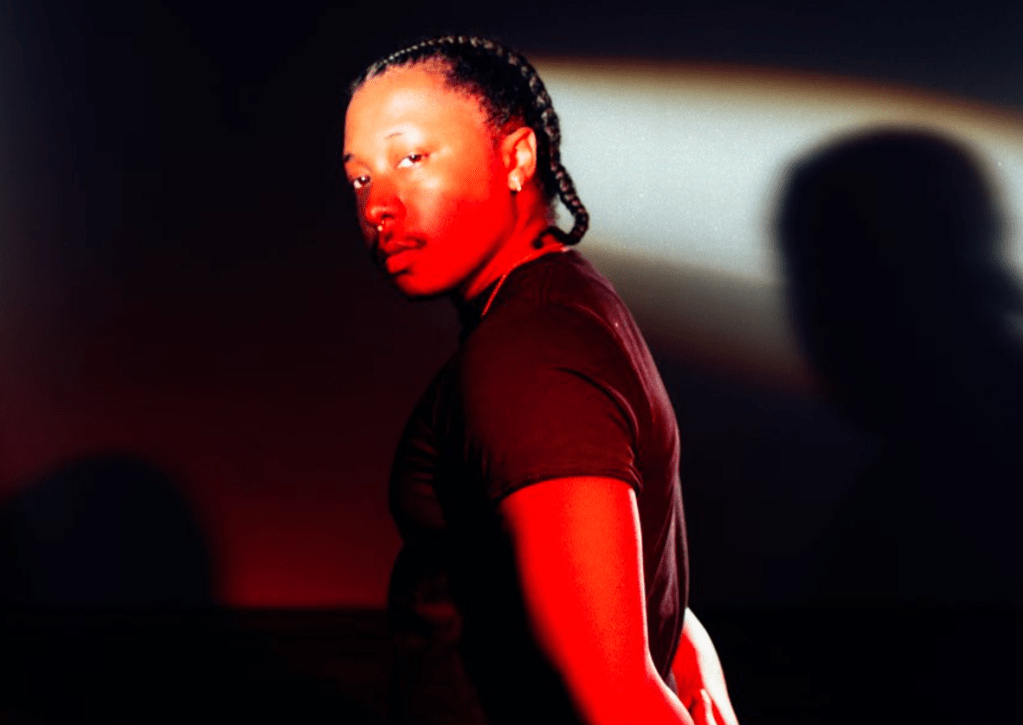
With time quickly running out, I used my last moments with McKinley to request writing advice as his parting gift.
IN: I’m working on an urban fantasy novel of my own. It’s about a young wizard—an orphan on a quest to stop the apocalypse in exchange for his mother’s soul. He can’t die until he finishes the quest—it’s the one thing keeping him alive. I wanted your advice—for aspiring writers… whether in rap, oral history, poetry, or novels.
MD: Remember everybody’s name and pronouns. That will always be important later on. Time is so important. You can’t change it—but in ways, you can bend it. Don’t go against it—but it can be bent. As for writing: Every moment you feel something inside—remember how that made you feel and jot it down. The way I write, all of my sh*t is—I actually—hold on, let me show you. So I’ll feel something—feel a moment—and I’ll write about it. Like, July 24, 2024—I don’t remember exactly what happened. Maybe I was with my family. But in my notes app, it says:
“Two boyfriends.”
That’s the beginning of a feeling I had.Then it says:
“One in a suit. One not. Not so young. Not so fast.”
I was thinking about aging, and how to capture that. Later, that becomes:
“A man and his former so fancy in the kitchen was created. The other one—the one on the former—one missing. Now they’re both sitting on the floor, on his backflip and saying sorry. Twinkle in his eyes. His thinking. And I wasn’t my decision.”
And that became a verse. I build on moments. And the cohesion comes from the fact that it’s me. Not that it’s all the same song. So I don’t have to worry about matching everything up. It’s all different moments—sad moments—moments I thought were important. That’s how I write. And that’s how I think songwriting should be approached.
 SoundFynd