

A Dive into R.A.P. Ferreira’s lineage
Emcee R.A.P. Ferreira and producer Kenny Segal’s third — and seemingly final — collaboration has now graced DSPs. Given Mr. Segal’s popularity amongst newer and younger fans of underground rap, this project may reintroduce the green horse for rap to an inexperienced audience. The Night Green Side of It, though, exists in deep conversation with Ferreira’s lineage and trajectory. To keep engagement with the art mindful, the knowledge must be done… The pieces must be thunk… This lineal expression must be illuminated.
The album opens with an explosive bit of Jazz instrumentation. Heads may recognize the provider of this percussion, Mekala Session, as one third of the HUMAN ERROR CLUB — another name nabbing deserved flowers for having worked with Mr. Segal. Heads will bow. Ferreira floats in forthwith; I wouldn’t insult the man by trying to break down all his lines, nor delineate, but one is useful here:
“The lo-fi beat poet eats Jazz.”
He’s done the biographical work for me.
The lineage Ferreira operates within is one deeply rooted in Jazz. He has long been open about the influence Myka 9 affected upon his style. The now-dead scene he made a name for himself in, Art Rap, owed it all to the whole Freestyle Fellowship — Myka 9, Aceyalone, P.E.A.C.E. & Self Jupiter — and the styles pioneered by them and their affiliates in the Project Blowed. Kenny Segal himself cut his teeth producing for the Fellowship and affiliated acts.
[An aside — it feels inappropriate, at this time, to mention this lineage without also paying respects to the almighty P.E.A.C.E., who passed away just this October. His 2004 album Megabite, too, was produced primarily by Kenny Segal. He was one of the greatest freestylers, with one of the freest styles. He is deeply missed.]
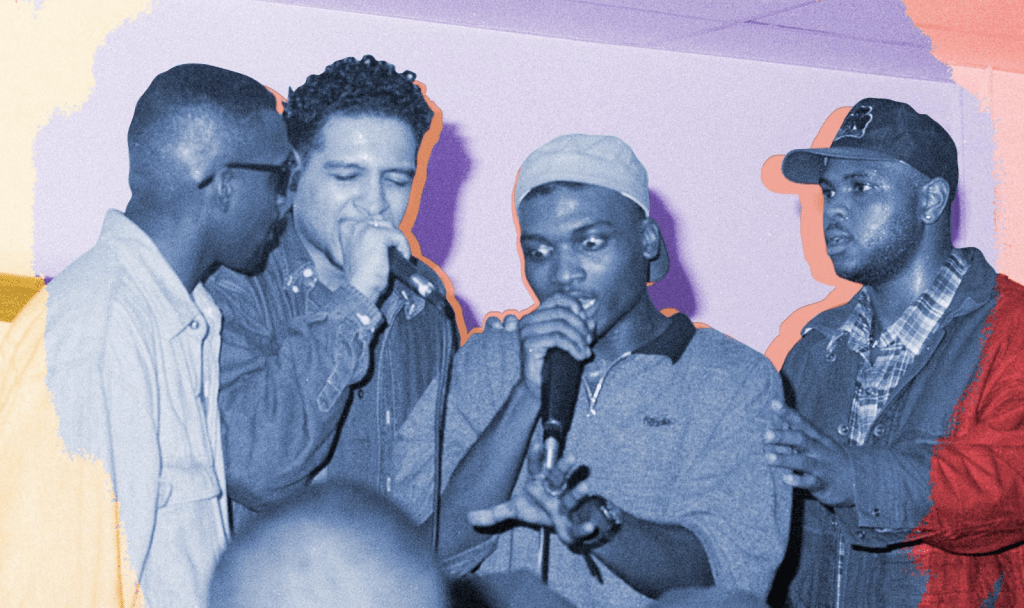
Beyond the Fellowship, though, is the history those cats know all too well — that of rap’s roots in Jazz. A history held dear by these jazz rap pioneers. These West Coast emcees’ impact on the Chicago-born, Nashville-based Ferreira is clear throughout; Ferreira knows about vocalese and all it did to inform rap, funk, and R&B. [Ferreira hits some vocalese stylings himself on the odd occasion; see Jeff Coffin’s 2024 album.] Ferreira writes what he lives, and he lives this lineage. His first collaboration with Kenny Segal, 2015’s So the Flies Don’t Come, featured Myka 9 amongst odes to the scene that grew him. The Art Rap iteration of it — pioneered by artists like Open Mike Eagle, All City Jimmy [fka NoCanDo], BUSDRIVER, and, yes, Ferreira — that, too, is laid flowers on the album had largely died by the time of that album’s release. The artists involved had moved on, to other sounds, with other collaborators. Its release, then, was accurate to the name; it kept the flies away from the broader lineage as he and Kenny figured out where to go next.
Poetry, too, is crucial to Ferreira’s perspective. Also named on their aforementioned first collaboration are Mike Ladd and Henry Dumas, and named throughout his discography are poets like Bob Kaufman (whom he has a whole album in dedication of), Amiri Baraka, and Gabrielle Octavia Rucker, among many others. These names paint Ferreira’s pulpit clearly: a preacher of Black aesthetic gospel, a proponent of the Black radical tradition, and a lo-fi beat poet who eats Jazz.
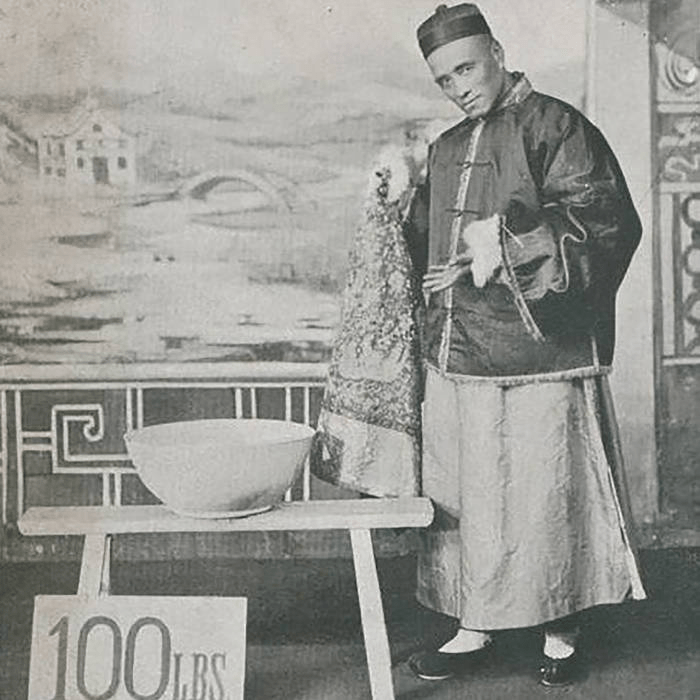
Ferreira’s poetic lineage is clear in ways twofold; first, the explicit references he makes. The second track, for example, samples a spoken excerpt from its namesake, San Francisco poet Jack Spicer. Second, interstitially; the manner in which Ferreira writes does bear its influences, yes, but is far more than the sum of its parts. He has a very potent manner of poetics unlike much anything [or anyone] else. R.A.P. Ferreira makes the quotidian grandiloquent. He describes a bobcat killing and eating a family of raccoons, lamenting even dirt’s digestion. It moves him deep enough to hide him, and the rest of the track, real jazz, is his musings on his mutilations. Aging, cashing a cracker’s commission, and being left. It’s all tied back to the crick behind his crib with a smirk and a trick. Peace to Ching Ling Foo. After the song comes silence, emulating the digital releases of many a 90s & early aughts classic, followed by the final, hidden track of the album, titled “more will than skill”. The song features a verse from milo, who, astute listeners might note, is R.A.P. Ferreira. Indeed, [maybe i like owls] is the name he bore through the advent of Art Rap and until the expectations placed on the name became overbearing, at which point he absconded, then adopted his birth name.
Art Rap has already been well-reflected. That iteration of this lineage has been dead for a decade and the heads who made it have all since moved on. In short, the name — which always poked fun at itself [“Michael called it Art Rap so you wouldn’t find it hostile,” rapped Ferreira on 2015’s true nen] — described a scene of LA-based abstract rappers who put their poetics to production styles pioneered by electronic and experimental hip-hop groups like the Low End Theory Club, an LA music club that blended wonky, glitch hop, downtempo, and Jazz. Those beats often underscored lyricism that was referential, verbose, and very honest. It was a weapon forged against the perceived triteness of pop tropes in the midst of a rap culture war. Still, by 2015, the scene had largely died, as its flagship label, Hellfyre Club, had collapsed. The scene was headstoned by Ferreira’s first collaboration with Kenny Segal.
No more lip service will be paid to Art Rap. As important a part of Ferreira’s history as it is, it would be silly to dwell much longer. I encourage any readers unfamiliar to listen to the music for themselves. I’d rather hone in on a critically neglected aspect of Ferreira’s lineage: the Blues.
Ferreira himself moonlights as a Bluesman named Crow Billiken. He put out a record under that name in 2022, If I don’t have red I use blue, but the real magic is in his live performances. As of writing this, Crow Billiken is strumming his way across the South. This experiment has not been kept contained; the influence of Ferreira’s Blues is steeped deep into The Night Green Side of It. “I’m not wise, I can’t make the Blues stay inside,” he raps on lead single by the head. It’s deeper than name-drops. It’s a mission statement. Reflecting on recent controversies, Ferreira raps, “The homies came to see me hang, gallis pole in June.” The line repeats. It’s an homage to the Blues sung by Leadbelly in 1939. These influences scintillate across the record, illuminated by the unabridged far better than I could on his own Soulfolks blog.
Kenny Segal’s genius in the production of this record lies in his sources. Much of the album’s sound is owed to the live instrumentation assembled for the album. These include the aforementioned Mekala Session, as well as HUMAN ERROR CLUB bandmate Diego Gaeta on the rhodes, Jordan Katz on trumpet, Aaron Shaw on the tenor saxophone, Ryan Crosby on bass, Jason Wool on piano, the Skyline Electric band with some additional instrumentation, an uncredited afrohorn player throughout, and, chiefly to my picture, R.A.P. Ferreira himself on the guitar. Kenny Segal brings them together — present-tense because it is an ongoing process throughout the record rather than a one-time assembly. The sounds he plucks unify these performers and bolster them.

The accreditation to R.A.P. Ferreira, not Crow Billiken, is not an insignificant choice for an artist so careful with his many pen names. I still count the days since the Scallops Hotel last opened. Ferreira picked up the guitar amidst COVID-era lockdowns, waxing poetics over waning crescents. Many hobbyists can relate; he just made Blues rather than sourdough. Ever since, though, that Folk and Blues influence has crept through his music. Not like it was ever wholly absent, Hip Hop does exist in conversation with these other Black artforms, a truth Ferreira will spew until his face turns blue [“I like fighting ’bout folk songs,” he raps on the opener], but that influence has only grown more potent. It has grown into an outcome most troubling: retirement…
Nothing is written in stone; an adage I once read literally chiseled into stone outside a bookstore in Vermont. Ferreira’s career has been him writing the same on all manner of moonstones [each bearing a post-script, reading “How you like me now?”], as, if there is any consistency in his decade-spanning discography, it is in his constant commitment to reinvention. Still, Ferreira has publicly floated the idea that this album may be the last rap outing we see from him — for a little while, at least, if not forever. He has tempered this statement, saying he has a handful of collaborative tapes in the cut, yet-to-be completed and/or released. It’s unlikely that The Night Green Side of It will be the last raps we hear from Ferreira. But he is floating the idea. It is coming, if not now, then soon.
R.A.P. Ferreira will rap forever. So he has assured us. Even if he were to hang up the microphone tomorrow, satisfied, even if it’s only Crow Billiken strumming his way across the South from here on out, the poems and paeans hitherto put forth will continue to ring true from Chicago, Illinois to Bessemer, Alabama, panging across echo trees and through oxbow lakes, wiring those few folks curious enough to seek them out. In a culture of constant consumption, the prospect of never again having the novelty of ‘new’ wrecks nerves. Fret not; appreciate everything the man’s given us. One part Jazz, one part Blues, all parts Poetry, bow tying his lineage, The Night Green Side of It is a brilliant send-off, and a brilliant introduction. He spent his whole life writing it. His whole life has been spent. What more could they ask for?
 SoundFynd