
Interview Sam Cohen
Most people have a piece of childhood baggage they will ignore for as long as they can. Avoiding unpleasant memories can be easy, but eventually, it’s best to confront your past. rum.gold, an R&B artist based in Brooklyn, has never been scared of his past, and on “Is There Anybody Home? (Pt 2),” he takes listeners on a journey from childhood to adult life.
rum.gold reframed ordinary album rollout conventions by releasing the second part of a two-part project first. Part 2, now available, addresses the questions he has faced as an adult, and Part 1, due out in March, is a reflection on his childhood. His “backwards” approach is deliberate and leaves a devastating trail back to his youth.
Growing up in the DMV, rum.gold found inspiration through 2000s R&B radio classics, including Destiny’s Child and Usher. Soon after, he began playing the trumpet, which introduced him to Chet Baker and Charlie Parker. His inspirations radiate in every track; his jazzy, melodramatic instrumentals beam while he crafts ravishing vocals.
“Is There Anybody Home? (Pt 2),” is a triumph in R&B. When rum isn’t floating between stanzas, he’s creating an ambiance open to every audience. Every track feels like spontaneously popping into a jazz bar in the Lower East Side and immediately falling in love with the music.
We caught up with rum to discuss “Is There Anybody Home,” growing up and transition, and his upcoming North America tour.
This interview has been edited for concision and clarity.
Sam Cohen: Congrats on the release of “Is There Anybody Home? (Pt 2)” Can you tell me a little about why you split the album into two parts?
rum.gold: When I started making the songs, maybe like two years ago, I noticed that there were two pieces, or two perspectives of the same story. So in my mind, it made sense to split up these perspectives into two parts. The perspectives are loosely adulthood and, more or less, childhood.
So, what that started to look like sonically was that the adulthood perspective songs began to sound darker, both sonically and textually, while the childhood perspective songs, although still lyrically as sad as the darker songs, were a little brighter and lighter. The childhood ones felt more like spring. So, it felt like an interesting way to split up a body of work that ultimately explored similar themes, but sonically, we’re a little different.
SC: Is part one, which is coming out in the spring, the childhood side?
RG: Yeah, it’s like the child-introspective side, which is why I started with part two, because it made sense to start with adulthood and work our way back.
SC: Does each part feed on the same narrative, or are they approaching different stories?
RG: It’s kind of one narrative that sort of stretches back from childhood into adulthood. There are moments in part two that feel specific just because of certain relationships of mine, but ultimately, it’s more or less a long narrative that kind of splits into two.
SC: This is your first project in a few years. What were some of the major inspirations?
RG: The first thing I’ll say is that there are a lot of films by Ari Aster that constantly inspire me. He has a way of talking about inheriting things, trauma, family drama, and relationships with our mothers that I always find very inspiring. I’m always trying to see if he talks about his family or his relationship with his mother, but it seems like he came from a pretty chill, happy family. I would think, “This guy has to be fucked up.” But, it turns out he’s not.
SC: Based on his movies, you’d imagine he is.
RG: Literally. I’m like, “How you and your mother totally normal.” But I think a lot of the way that he sort of touches on those topics is interesting to me. I think I just like how I can start telling stories about my relationships with my family and my mother in a way that makes sense for me. That’s one inspiration.
I think the other inspirations, generally, I listen to a lot of music. I listen to a lot of different types of music, but I’ve noticed that I listen to a lot of something that’s texturally, production-wise, sonically interesting, usually the vocals, if there are any, are pretty secondary. The melodic content of the vocals is pretty secondary for me.
The flip side of that is I love great vocalists, and I love songs that have really great vocals and melodies. However, many of those songs lack textures that I find interesting, because I tend to listen to songs that are textually rich, where the vocals are often secondary. So I think when I was making these songs, I was thinking a lot about how to make songs that I thought were textually interesting, while also keeping the vocals melodic and the main focus.
SC: What artists or bands come to mind for that strong texture feel?
RG: Some of the things that I was listening to that inspired me were Saya Gray and a lot of Radiohead. OK Computer is quite interesting to me.
SC: The album is about the things we inherit from the environments we grow up in. What were the artists that you grew up hearing in your home?
RG: Often, when I listened to music, it wasn’t necessarily in the house; it was mostly in the car. At least, those are the times when I remember consciously paying attention to music when I was growing up.
Because I was somewhat raised by a woman in her 20s, who was a black woman, and we lived in the DMV at the time, I listened to the things that generally appeal to that demographic, which is lots of R&B and hip-hop. A lot of Destiny’s Child, Usher, Mariah Carey, and Lil Kim.
I started playing the trumpet at a very young age, and once that started to become more interesting to me, I started to listen to jazz a lot more. I remember taking an interest in Charlie Parker and Chet Baker, specifically the Chet Baker Sings album. I also remember getting into Roy Hargrove, which came a little later, actually.
SC: Why did you decide to approach the idea of childhood baggage at this point in your career?
RG: I think, honestly, the reason it came now was that I got married very young and was going through a divorce. A lot of what I began to think about was why I reacted to things in certain ways, or why I was the way that I was in terms of my relation to people.
I reflected on why I felt the way I did when certain things were said, why I said specific things, why I reacted in certain ways, and why I felt anxious in those ways. When I started to ask myself those questions, I started to make a little bit of connections here and there. I usually try to write songs where the narrative and concept are really clear. When I wrote the songs during my divorce, I wasn’t necessarily consciously trying to create anything in particular. They were just sort of coming out. I started to just dive deeper into why, and I think that’s just led me to my house.
SC: Were there certain childhood memories that found their way onto the album?
RG: A bit, I guess. I have an image in my mind of being outside with my older brothers, racing each other, like running barefoot. That sort of image is just playing in my head. So I have a little bit of audio of kids playing sprinkled into the intro of the album. It just kind of set the scene.
We see those sorts of themes in the “Is It Something I Said” music video. Can you tell me a bit about the making of the video?
RG: I don’t listen to music at home a lot. Generally, I like a lot of silence. And if there’s no silence, I usually have YouTube circling through random videos. I just press play on something and sort of let it play things. And a lot of times I’m watching “My Strange Addiction” or a Gordon Ramsey show, and sometimes “Hoarders” will play.
There was an episode of “Hoarders” where these sisters were talking about being hoarders, and how their parents were also hoarders, which I found interesting. And then I saw another episode where a mother started to notice her son showing early signs of hoarding toys and other things.
I thought this was a really apt metaphor for inheriting baggage and trauma from your parents. Literally, they’re inheriting and taking physical things right from their homes and keeping them into adulthood. I just thought it was a beautiful metaphor for what I was trying to convey in this project. So then, with the video, it felt really daunting to try to figure out how to create, essentially, a “Hoarders” episode. The video begins with his childhood with his mother, and then it turns into his own episode of “Hoarders” as an adult. With the help of some friends in Brooklyn, we were able to make it work.
SC: You can feel the overwhelming baggage. On every watch, I’ve picked up something new in the background.
RG: There’s a lot in there. There are a lot of things that I wanted to reference from my personal childhood and from browsing the internet. It also has a little bit of a religious aspect. We spent months and months putting together this mood board of images and thoughts and references and shots that we wanted to include in the video.
Eventually, we had enough to sort of be like, “Okay, we have 8 have more than enough to make this sort of like hectic, chaotic hoarder thing feel real.” We then narrowed it down to the ones we thought were most important. Then we rented a space and drove it with shit, and hired a kid, and got to work.
SC: It came out great. There’s a lot to take in there, but in a good way, in a way that connects to the themes.
RG: It feels like there’s chaos, but it’s also quite sad, yet beautiful in some ways. And it’s really emotional, but not in an overt sort of way. A lot of it implies a feeling that I wanted to capture, that I think we did.
SC: With the world being so upside down and feeling like there isn’t a light at the end of the tunnel. How does the current political climate affect your songwriting?
RG: In regard to my songwriting in particular, the one thing I have started taking more seriously is being as honest as I can in my songs. I’m noticing a lot of oversaturation, generally when I open my phone. I’m starting to feel like I don’t know where I can go to find true, honest information.
I also feel that AI is taking us down a really unfortunate route. So, I think with all of that together, it makes me feel like “Okay, if I am gonna write songs, I just want to be honest and true to the human experience.” It is important and will always be important. Even with the conversation about AI, we can ask a computer to write a pop song or an R&B song, but there’s something that I have that maybe AI doesn’t.
SC: I agree. I think, even with the danger of AI, it will never overtake honest songwriting.
RG: I tell myself that and hope that is actually the truth. I am choosing to believe that’s the case until I have reason to otherwise.
We also have live shows, which are another way for people to feel like they want to experience something genuine and true, honest, and human.
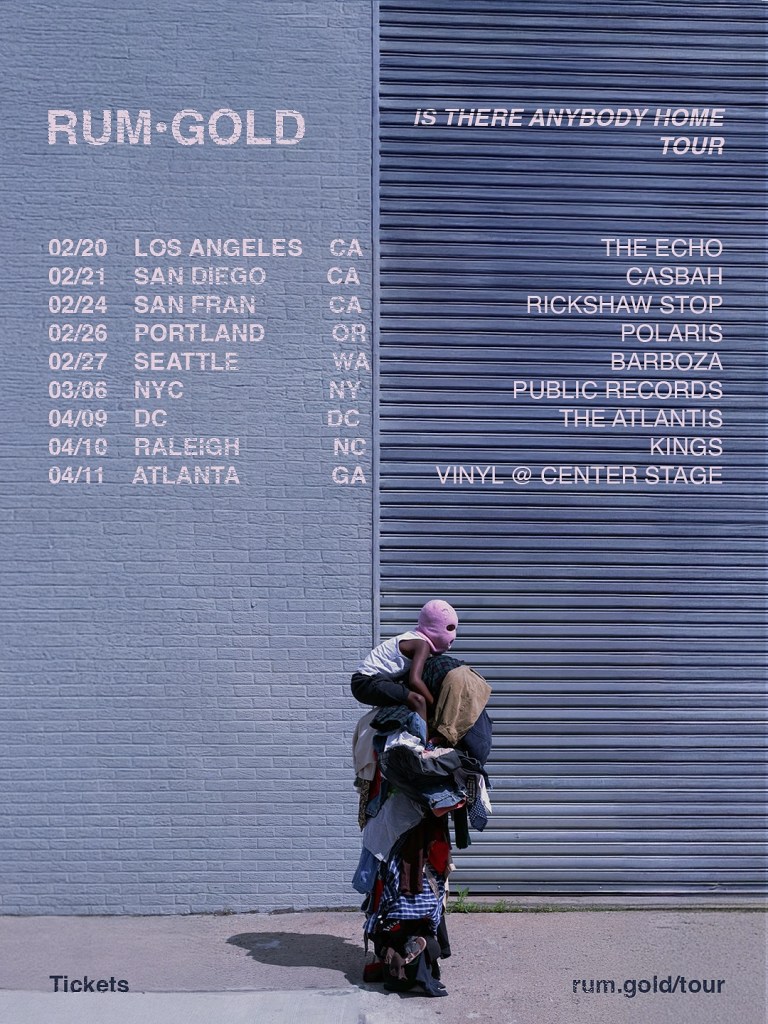
SC: You’re going on tour next year, and you’re playing smaller rooms like Public Records. What can fans expect from the live show?
RG: A space that feels safe and honest, where you can kind of forget for a little bit what’s going on in the world. A nice, reflective, intimate evening and maybe whisper some pretty songs.
The thing I’m most excited about is just being able to connect with people in a real way and make eye contact and talk and have conversations and engage. I think we’re also so inundated with fucking information and stats and images and things all the time. I can speak for myself when I say I feel disconnected from the world and people than I’ve ever felt before. So I’m looking forward to, at least for a moment, being able to kind of connect and engage with people.
SC: That’s what live music is for. Especially now, it does feel like a break from being on our phones.
RG: Yeah, and after the show, I tend to roam around and kind of talk to people and say hi and take photos and stuff. So that’s my favorite part. Honestly, performing is not my favorite part of live shows at all. For me, it’s actually like engaging with people after the show.
rum.gold is touring North America in 2026, find tickets here. Find more about rum.gold, here.
 SoundFynd