
By Sam Cohen
I spent the whole day that Cameron Winter performed at Carnegie Hall scouring Reddit, resale sites, and any other leads looking for an open seat. Sold out on SeatGeek, $600 resale prices on StubHub, solely scammers on Twitter — the world didn’t want me to see Winter live. By showtime, I was in bed. I couldn’t handle not being there; it made me ill.
When I woke in that treacherous post-nap haze, unsure what day it was, my feed was filled with every angle of Paul Thomas Anderson roaming around the hall with a 35mm camera. Every other clip was Winter beaming a Heavy Metal prayer, but PTA’s presence tempered my hysteria. Whatever jealousy I held for the flock at Carnegie fleeted a bit. I could only imagine what PTA was envisioning that evening.
On October 1st, the night before Winter’s Geese conquered Forest Hills Stadium for two unbreakable nights, PTA’s Cameron Winter at Carnegie Hall made its world premiere at the New York Film Festival.
I was in attendance, ready for my boots-on-the-ground “I was there” moment in Winter’s lore. The sold-out crowd was brimming with the luckiest of the Geese-obsessed, along with every actor, journalist, and NYFF contributor Winter had charmed up to then. PTA and CW introduced the film without much fanfare. When it was Winter’s turn to speak, PTA looked to him and joked, “You don’t talk so much?” The lack of introduction suits the 75-minute runtime. Unless you were at Carnegie that night, there was no way of knowing how you were about to feel.
After grounding the audience via establishing shots of Christmas shoppers, box office exchanges, and classically dressed ushers, the concert’s atmospheric opener, “It All Fell In The River,” rolls in. By the first verse, it’s clear this is a true concert film. PTA isn’t following Winter yelling at strangers about throwing glass in the street like in Don’t Look Back. Nor is PTA capturing Winter’s pre-show ruminations like in Gimme Shelter. Cameron Winter at Carnegie Hall is about the 70 minutes that Winter championed New York’s most tender and honored stage. It’s the only way to make this film, and viewers will quickly realize there’s nothing else they need to see.
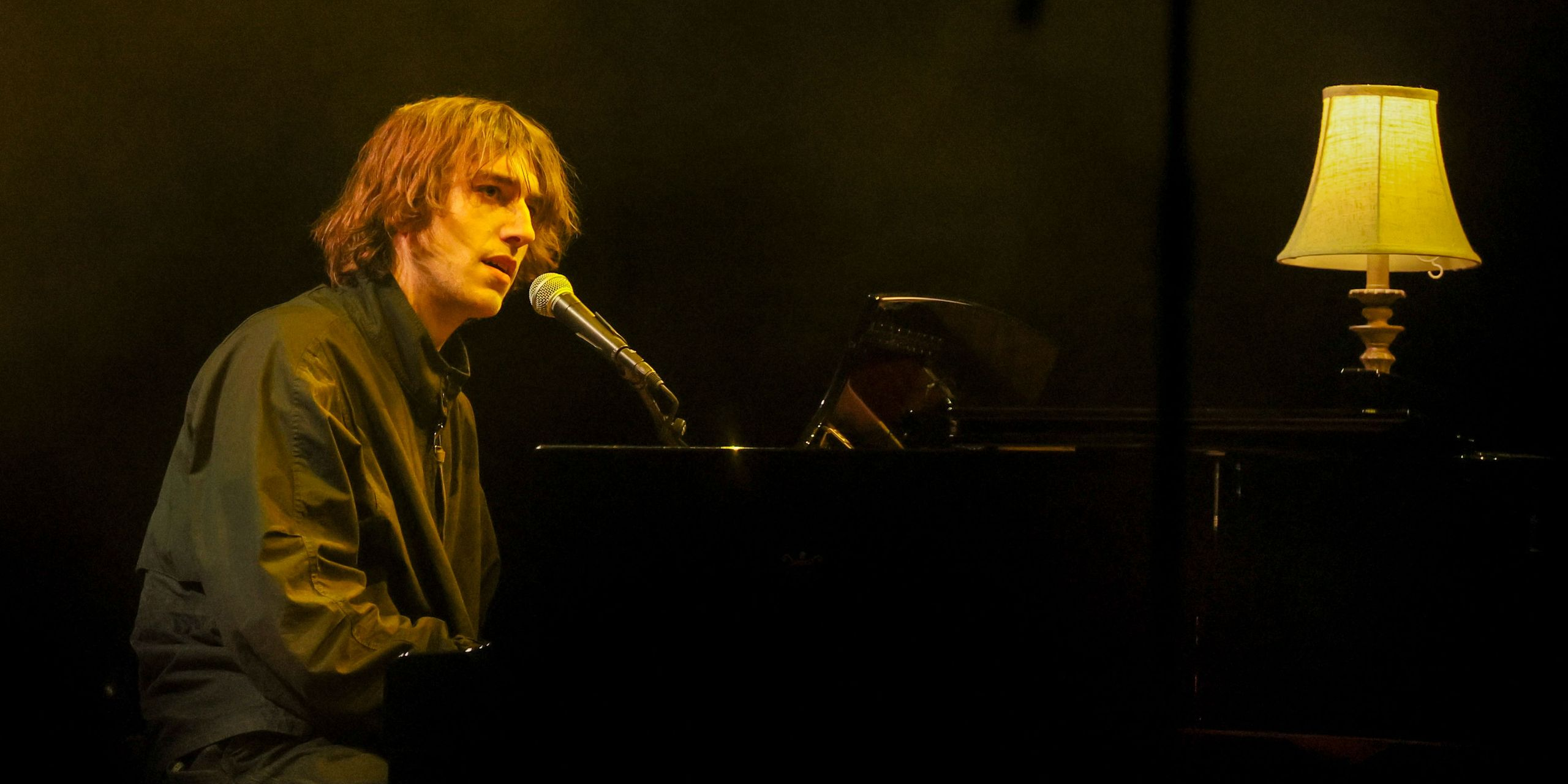
Regardless of your fascination with Heavy Metal, Winter transfixes you with his warbles and off-kilter piano through PTA’s magnifying glass. Much of the focus early in the film is merely on Cameron’s face, with notes of his piano in the foreground. No grand expressions or fourth wall breaks. You’re simply viewing Winter at work. When the audience appears in the frame, they’ll often disappear into a slowly dimming cloud around Winter. These close-up, almost intrusive shots tend to linger. There’s a comfort that comes with studying Winter. His confidence produces a reverence that PTA affirms. As if he’s sentenced to a life beside his sacred piano or a monastic sacrament, Winter is a poet at peace, doing the thing he’s dedicated his life to.
Lost in this singular focus, you forget where Winter is. Not location-wise, but his position. Yes, he’s performing at Carnegie Hall at 23, the same room Bob Dylan played at 22; however, Winter has his back turned to the crowd. Given all the time PTA spends framing CW without an audience, it’s jarring when his perspective is first revealed. The unattainable sensation the film oozes multiplies when the crowd, in full, appears. These shots, varied and brief, don’t make characters out of individual attendees. This film is about Cameron Winter, and that’s that. Even when Carnegie’s patrons are viewed as a whole, they are a device to stress Winter’s prowess and nothing more. It’s not that the film is obsessed, but rather that his music is so dominant and shattering that directing your concentration anywhere else would be cruel.
Winter’s wisdom radiates from the start, but it’s in the back half of the film where the mounting emotion overflows. Carefully treated by PTA’s understanding of the moment, unreleased track “If You Turn Back Now” plays, which may be remembered as one of Winter’s most inventive when it’s all said and done for lines like “The devil is real and he’s living in heaven” and “My heart is for those who leave me alone.” Shortly after, PTA takes his biggest leap in the film. A fluid dolly shot takes over the frame, rolling in from backstage to the foot of the Steinway. As Winter barrels through “Nina + Field of Cops,” the shot remains still, as his beckons trace the legacy of who fans suspect is Nina Simone. Here, Winter enters a void of fuzz. He attains a newfound level of meticulousness, and it’s all documented — up close, subtle, and personal.
As Winter finds nirvana in real time, arguably his most heartbreaking songs, “$0” and “Take It With You,” round out the main set. By this point, PTA has pulled back from the dolly shot, capturing the weight of the spectacle from the crowd’s outlook. The camera is still solely interested in Winter, but the emptiness in the crowd echoes in his spells. As “$0” gave way to “Take It With You,” Alice Tully Hall’s perfect sound design was muffled by viewers’ whimpers and broken sobs. At no point was the viewing a singalong, but it slowly transformed into a collective wake of lost beloveds. When the last plink in “Take It With You” numbs, a fiveish-minute standing ovation erupts, shot from the stage’s perspective on the crowd. In the wait for an encore, the credits roll underneath hollers and tears. Eventually, Winter returns for one last song. “Vines” preserves all the emotion in the Carnegie crowd. As he murmurs the film’s final line, “I feel loneliest when I’m with you,” viewers at the premiere had to remind themselves it was the first day of October, and not December 11, 2025.
PTA does what every concert film director should do: place you in the best seat in the house. And Winter does what he does best: take the stage.


Leave a Reply