
By Mariah Jolie
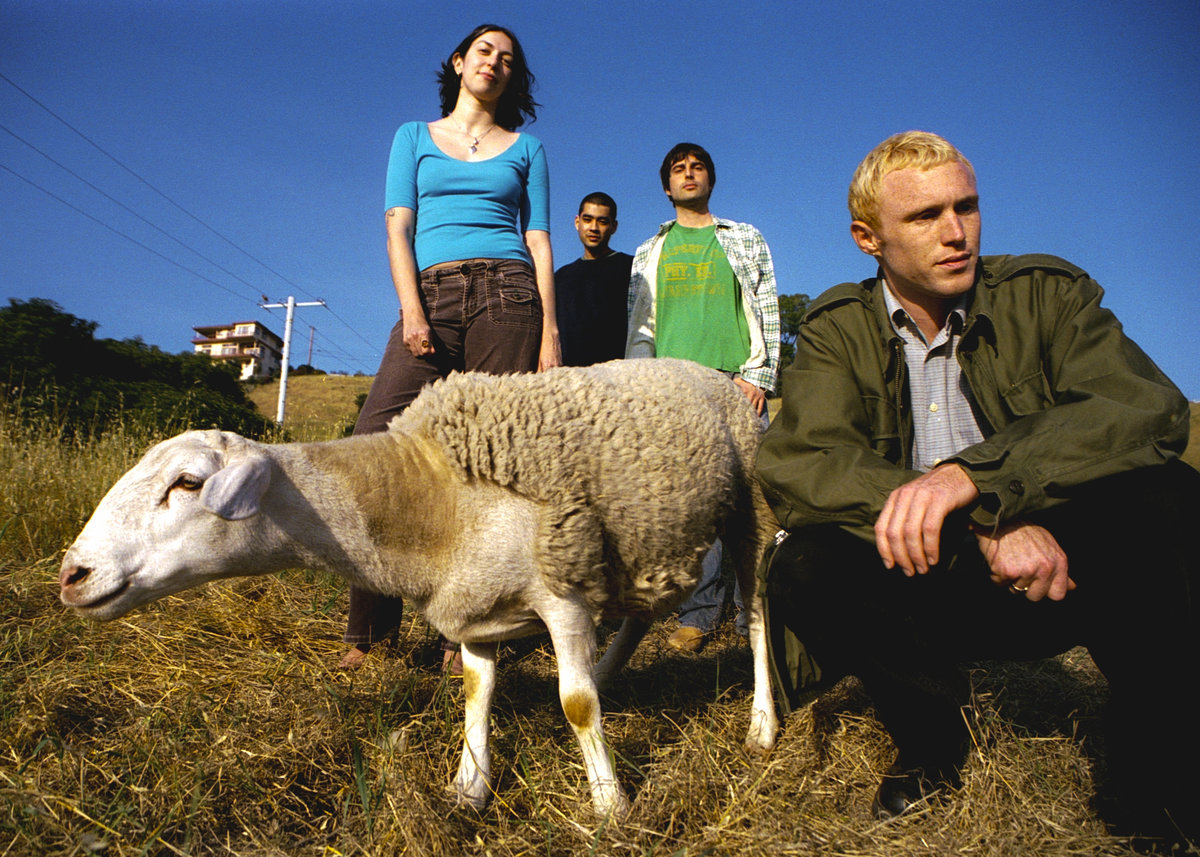
LA natives Roman Zangari, Kyra Morling, Sean Edwards and Cook Lee-Chobanian have spent years making music individually, but together, they are Jawdropped. An indie rock band built around their four distinct voices, one shared vision, and instinctive chemistry. Now, they’re officially introducing themselves with their debut album, Secret to Spare, out September 18th, followed by a tour that will take them across the U.S. and Europe.
Guided by ‘90s indie rock, power-pop, and the eclecticism of records they grew up loving, Jawdropped draws from artists like the Lemonheads, Teenage Fanclub, the Replacements, and Sheryl Crow while remaining rooted in their own perspective and the world they’re making music in today. Their goal isn’t to pretend it’s 1996, but to take what they love and make it theirs.
I sat down with Jawdropped to talk about Secret to Spare, the evolution of their sound, finding chemistry as a band, and more. What stood out most was just how deeply the members value creating music together, their true passion for music shines beyond paper and ink, it’s in the way they speak and how they produced this record as a team. This album is their way of unapologetically declaring, “This is who we are.”
With Secret to Spare, Jawdropped is officially leaving the port and they’re doing it completely on their own terms.
Mariah Jolie: Firstly, congratulations on your debut album, Secret to Spare! What does it feel like to have it finally finished?
Roman Zangari: It’s been coming for a while now, it feels nice to finally have a full, complete project on the way out. We’ve been getting by with only having like five songs out, which feels kind of crazy.
Kyra Morling: It’s been a long time coming.
Sean Edwards: Yeah, we did the hard part a while ago, so we’ve been just waiting.
MJ: What song are you most excited for people to hear?
KM: That’s a good question. I feel like it’s “Cellulite.” Maybe just the songs that are gonna be singles. I think we wanted singles to have nice rocker tracks, and there’s a little bit more of an eclectic kind of song.
SE: We got range, you know? Just no one knows it yet, but they’re about to find out for those with eyes to see and ears to hear.
MJ: I was able to listen to the album prematurely, and it seems like you guys blend different genres while still being in a lane of your own, like “Smoglight” and “Two,” feel like two different ends of a spectrum. If Jawdropped had its own genre, what would it be called?
SE: It’s rock and roll, baby. What people forget is this is what rock and roll is. You know, listen to Big Star or any of the greatest of all time. They got your slow jammers. They got big rocker tracks. You know, we go fast, we go slow. That’s kind of the name of the game. I think people forget that sometimes. You can make more than one type of song on a record and it’s still a rock.
KM: I think that our genre is when the four of us come together. It’s like it’s only Jawdropped when all four of us play together. So whatever genre that is: Kyra, Roman, Sean, Cook.
MJ: You guys have only been a band for two years, yet you’re so cohesive and unified. What’s important for good band chemistry?
RZ : I think honestly, having some kind of overlap as far as what your like vision for the band is. I think there’s really positive things that come from having people in a room who have different creative interests and different kind of inspirations, but I think part of the reason our chemistry clicked so early on was that we all had a really similar vision for what kind of music we wanted to make and what kind of stuff we were inspired by at that time. It was very cohesive, I guess.
SE: Apple beers too. Doesn’t hurt anybody.
Cook Lee-Chobanian: Yeah, we like each other too. That helps.
SE: We practice a lot. We like to play a lot in the room together, and I think that was always something we liked doing and wanted to do, and birthed out of that. It’s just been a lot of time, and we play stuff in the room all the time that doesn’t sound like Jawdropped, you know? But we know it, and I think doing it enough makes you be able to parse out like what’s a fun jam to like mess around on, and what does our band sound like?
And those things are two different things. When you’re starting to play music, it can get confusing. You’re like, “Oh we’re jamming this, and it sounds cool”, and then it’s like “Yeah, but this isn’t what your band sounds like. This is just jamming.” And that’s pretty readily apparent when you hear it. You know, you’re like, this is a jam for people in a room, and this is a song that’s like your band. And not getting those waters crossed is good. You have to just play it a ton to figure that kind of range out.
MJ: With so many different personalities and ideas, when do you know when you’re really on to something?
RZ: That’s a good question. It’s kind of indescribable, a sensation almost. I think the four of us tend to have a feeling when we’ve struck gold or made a song we’re really proud of. I think you kind of just know when you know, something clicks and you just feel it.
KM: Yeah, trusting your point of view, trusting your artistic integrity, going forward and seeing it through without any attempt to not prejudge it.
SE: You have to try. You have to give it a shot and see an idea through, like Kyra’s saying, to know it sucks. Sometimes you don’t know it sucks till you finish it, and you’re like, “Oh yeah, that’s super whack. Let’s never do that again. Sweet. Now we know.”
MJ: As a listener, the album has sort of a ‘90s, early 2000s sound, while still sounding fresh. You even nod to the “Keep Calm and Carry On” trend in your song “Cup.” Was that intentional, or did that sound come organically when making this album?
RZ: It’s intentional. I mean, it’s like the stuff that we were influenced by when we were talking about what the band was going to be. It was a lot of ’90s indie rock and power pop revival. Lemonheads, Juliana Hatfield, Teenage Fanclub, those bands were at the front of our mind when we first started talking about putting a band together and working on songs. So it was intentional, but I also think it’s just what happens when you know you start a band and you want to emulate the kind of people that you’re inspired by or you’re really into.
SE: In terms of feeling fresh, I think the trick is to be influenced by stuff and try to make songs that sound like the shit you like, but do it from your perspective because you’re not Julianne Hatfield. You know, we’re not in the ’90s. We’re not Sheryl Crow or whatever. We live now, so it’s one of those things where, like, none of those people were kind of making songs from the perspective of like the ’70s or something. They were doing it for their time, which is why it feels so cool.
People love the ’90s or the early 2000s. And so you have to make the stuff from your own perspective. If you try to pretend like you’re in 1996, it’s gonna come off as disingenuous or just sound like those records. And what’s the point of making something that sounds exactly like something else that’s come before it? It’s supposed to be your own perspective. That’s the beauty of rock and roll. That you can make rock songs, but they’re yours and they’re from what you think and what you feel in your time.
MJ: What albums and songs did you listen to while making this album?
RZ: It’s a Shame about Ray. Water by the Lemonheads is a big one. Bandwagonesque by Teenage Fanclub. Those are two I think that are always kind of a reference point for us.
KM: The Replacements.
RZ: Yeah, a lot of The Replacement stuff, like Tim and Let It Be and Car Wheels on a Gravel Road by Lucinda Williams. There’s plenty more.
SE: What’s the Sheryl Crow record, Kiera?
KM: Tuesday Night Music Club. Sheryl Crow’s debut. That’s the one. I mean, talk about an eclectic record too. I feel like I’m always gonna be informed by that.
MJ: Cook, do you have a favorite drummer that inspired you for this project?
CL: I don’t know. While you guys were answering or even when you asked the question about being influenced by the ’90s, I was thinking to myself you can’t really play ’90s drums. But I guess I have favorite drummers, but not really any that influenced me for what’s on the record. Honestly, Murph, who’s from Dinosaur Jr. who also played on Car Button Cloth by the Lemonheads. He’s one of the best drummers from the ’90s. I guess yeah. I take it back. Actually, that’s the big one for me. Awesome. I talked myself into it.
MJ: (Laughs) It just clicked! With this ’90s, early 2000s sound, do you think it’s coming back, or is it something that’s never really left?
RZ: I don’t know. I mean, I think I think it definitely feels like it’s in the zeitgeist right now. I think there’s a lot of like ‘90s bands that are like you know reuniting and going on tour and like finding out that they’re way more popular than they ever thought they were, or like more popular than they were in their heyday, or something. I think that definitely adds to it. But I also think it’s, in my mind, at least, the last time that guitar music was really popular in a mainstream way. And it’s not like guitar music has gone anywhere. There’s been bands making guitar music, making rock in the underground for forever, but it does kind of feel like maybe now there’s like a bit more of a willingness to embrace that at least on a mainstream level.
You know a lot of pop stars and people that are non-traditional like rock artists, like embracing guitar. I mean, Charlie XCX is a great example. Even the new Kim Petras album, there’s stuff that that guy from Porches wrote, you know?
RZ: There’s a lot of really cool stuff like that happening right now, and to me, that marks a full circle thing happening with guitars in popular music. So, hopefully we’re at the right time for our kind of stuff to get through to people.
SE: I think it has a lot to do as well with the kind of age demographic of things going on. Like we’re all in our late 20s, early 30s, been playing music for a long time. So there’s a big nostalgia point for this type of music. It’s what we grew up listening to as kids, probably what our parents listened to. It’s what was in the zeitgeist when we were young, and then a lot of people making music right now are in their late 20s, early 30s, are breaking through and becoming popular, and whatever the case is, it’s reaching back to everything that felt really good when you were a kid. I think there’s also a point where the future is quite uncertain at the moment. We live in, to say the least, trying times, and it’s harder to envision a future and to look forward to what the future will sound like, which I think a lot of people were doing in the ’90s with techno.
When Bill Clinton was president, we had a budget surplus and everything felt like it was going to be okay, and now it’s a lot of reaching back and looking for comfort and things that feel good and you can grab onto and super solid and super real.
I think guitar music in the age of AI and shit is a comforting thing because you can just watch the four people do it. It’s not faked in any way, it feels very human, and I think that’s necessary at the moment. And people respond to things that feel human and real. We do for sure.
MJ: Roman and Kyra, your voices work so well together. How do you decide who sings what? How do you blend your voices together? Did that take a lot of time to do?
RZ: No. I mean, I think the first time we tried to sing together, we realized it just sounded good. (laughs) Honestly, but as far as deciding who sings what, at first it was kind of more of whoever’s writing the lyrics gets to sing that part. It felt more intuitive, but there’s a few songs on this record, we both realized, along with the rest of the band, like, “Oh, it actually makes more sense to have somebody else sing this, it suits their voice better, or it’s a little bit more interesting to have the perspective of the song come from one person’s voice rather than the person who wrote the lyrics.”
KM: Yeah, it’s definitely like another form of a tool or an instrument. It’s just what sounds best for the song, but it’s just you have a preconceived idea of “I wrote this therefore I sing it.” But it’s about what serves the song best, you know?
MJ: Was there a song that went completely different in a different direction than when you originally wrote it?
KM: Probably “Cellulite.”
KM: We couldn’t really figure out how we wanted it to go, and it was totally different. I thought it’d be a little bit more upbeat, maybe.
RZ: Yeah, upbeat and kind of faster, but it ended up being this slow, melancholic, old country or something, and for the better, I think it sounds awesome. It’s one of our favorites.
KM: But that’s pretty much it. I think for the biggest 180.
CL: “HighBeams” was like a slow song at first.
SE: When it got written, “Cup” and “HighBeams” kind of were born simultaneously-ish, right, Roman? (Roman nods). We were kind of playing both of them. There’s these two new ideas, and then part of “HighBeams” came from a different song, and we switched around a bunch of shit, so that was a cool one.
MJ: How do you decipher from writing initially and then playing it? As you were saying some of them start off as fast paced on paper but are played slower. Is that something that’s intuitive when you work together?
RZ: Sometimes it’s intuitive, but I also think that a lot of how we like write and rehearse is just kind of playing through stuff together in the room, and I feel like the more you do that, the songs start to kind of reveal themselves, like how they’re supposed to be. Tempos will change and the feeling of something will change. Once we all kind of put our parts to it and and jam on it a few times, it kind of starts to show you the direction it’s supposed to go.
MJ: What’s one thing you hope your audience takes away from this album?
KM: I hope that they enjoy it. I hope that they’re ready to hear some more. It’s nice to formally introduce ourselves as a band, and I just hope that they’re ready too. We’re ready to make more music. We hope that they want to come out and see it live. I hope it becomes a classic at their house.
SE: I hope they take away what we sound like. This is what Jawdropped sounds like for real, you know, because there’s the EP which has some different sounds on there. This record’s gonna come out, and it’s like “What this band sounds like.” They’re either gonna get on board or be like, “Damn, this sucks.” But in any case, we are leaving the port.
MJ: What’s the energy now that you have going into this tour?
RZ: We’re really excited. It feels cool to be able to tour and have a bigger discography to pull from for music to actually play at the shows, but also I’m excited to get to hear from our fans and the people at the shows like what tracks from the album they’re excited to hear and what they react positively to.
The last time we were on tour, I think we only had one song from this album out, “Monday,” the first single we teased. So there wasn’t much out for people to grab onto. I think this time it’ll be cool to see what clicked from the album.
RZ: Yeah. What are the crowd favorites? What are people excited to hear? And plus, we’re going to Europe for the first time. We went to the UK earlier this year, but we’ve never done mainland Europe, so I think everyone’s just excited to get to play it, get to travel.
SE: It’s gonna be sick to actually be able to give someone a record too. So sick of disappointing people at the merch table when they’re like, “Can I buy your music?” And have to be like “No, not really, sorry. It’ll be out in a year.” And then we sold out of CDs and tapes and shit. It’s always kind of a bummer. So it’ll be cool to be like, ”Yeah, you can buy it. Here it is.”
MJ : If we were to check back in with Jawdropped a year from now, what do you hope has changed, and what do you hope never changes?
SE: Four different tour buses.
KM: We all got private Jets (laughs). I think this is a pretty good moment right now because this is right before our debut album. So what I hope doesn’t change is that we have the four of us, and we all get along, and we’re all united in making Jawdropped the best thing it can be. So this kind of feeling, because we’re putting this out, and we’re introducing ourselves as a band. There’s no outside noise right now. What’s about to happen is that there’s going to be a lot more people listening to music, and there might be different opinions coming our way. So I want to just hold on and protect the band and keep our perspective nurtured, and not listen to anyone else.
RZ: I agree with Kyra. Just keeping the optimism, it would be nice to have more people hear the record and a bigger fan base. I think we’re really looking forward to being able to be at a point where we can tour the country and headline properly. I think we’d love to be at that place in a year from now.
CL: I’ll piggyback off of being able to headline and go to different places around the country and what we’re already doing, but have more of assurance that there’s going to be people there to see us. It’s always fun to play in new places, but you want to get to the point where it’s cool to see people come out too. You remember talking to people whenever they really came for you, no matter who you’re opening for or whatever. And that’s happened. We’ve been lucky. That’s happened to us like a fair amount. But yeah, I would say in a year, be at that point, and then also still have the excitement, the optimism that we have now for making the music, and then all the stuff that comes along with releasing it too.
SE: I hope we can upgrade from the motel scenario to maybe a Holiday Inn Express or something, like always in a hotel with a lobby and a good continental breakfast would be really sick.
MJ: Anything you want to say to your fans?
RZ: We love you. Thank you. Thanks for coming to shows and buying the record and pre-ordering the record. We’re really excited to get to share what we’ve been working on with everybody, so it’s very appreciated. To reference what Cook just said, when you’re starting a band and you’re really watching that audience grow, from literally five to 10 to 15 to 20 people, you really notice those extra people at each show, and those extra people buying merch really do make a huge difference.
SE: Definitely thank all of you. All of you are really good looking and dress really cool.
KM: Abundance is in your future!

Leave a Reply